Youtube Gear Mistakes Masterclass: Fix Your Setup
Many creators invest heavily, only to see lackluster results. The problem isn't usually the gear itself, but fundamental youtube gear mistakes in how it's chosen and deployed. We're cutting through the noise to reveal what truly matters.
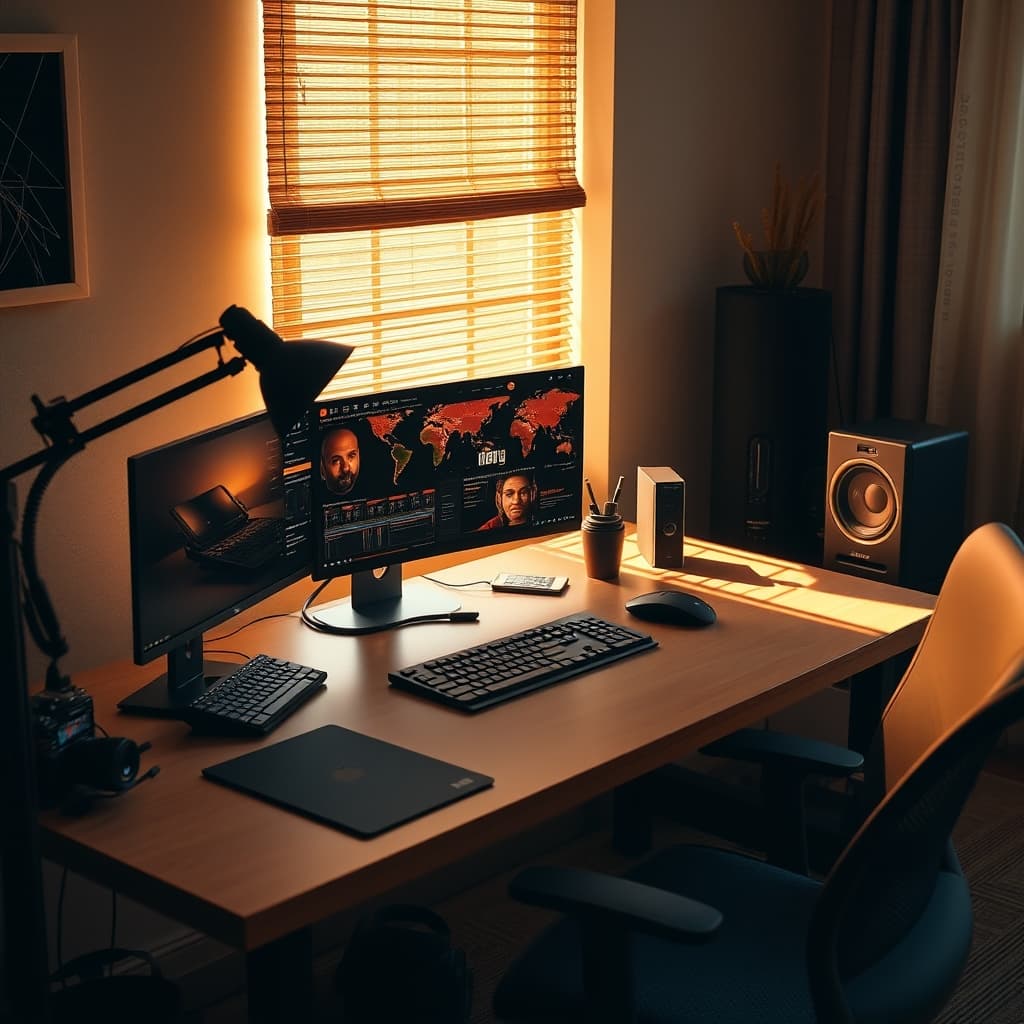
I've seen it countless times: an aspiring creator, eager to make their mark, drops significant capital on what they believe is 'pro-level' equipment—a new mirrorless camera, a high-end XLR microphone, a powerful ring light. Yet, their content still falls flat. The video looks muddy, the audio is an echo chamber, and the overall impression is decidedly amateur. The common thread among these setups? A series of foundational youtube gear mistakes that even expensive hardware can't fix. The reality is, most people chase specifications and brand names, entirely missing the critical interaction between gear, environment, and intent.
Problem Breakdown: Why Creators Fail to Optimize
The fundamental issue isn't a lack of effort, but a misdirection of it. The market is saturated with gear reviews that focus on isolated performance benchmarks rather than real-world application within a broader ecosystem. This leads to what we call 'spec sheet paralysis,' where creators optimize for numbers (e.g., 4K resolution, 192dB SPL handling) that have little to no bearing on their actual content delivery or audience perception. The drive to 'keep up' with the latest tech often overshadows the more impactful, yet less glamorous, aspects of a well-engineered setup: acoustics, lighting quality (not just quantity), and ergonomic efficiency.
Our approach at GlowRig isn't about acquiring more; it's about optimizing smarter. We focus on an intent-driven gear selection philosophy. This means understanding your specific content type, audience, and distribution platform before you even consider a purchase. For a talking-head YouTube channel, crisp audio and controlled lighting are exponentially more critical than a cinema camera capable of RAW video capture. Conversely, a cinematic travel vlog needs robust stabilization and dynamic range more than an elaborate studio microphone.
The Truth About Audio: Why Your Mic Isn't The Problem
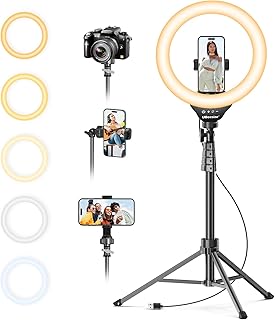
UBeesize 12 LED Ring Light
Entry-level creators needing versatile, portable key light
- 12-inch LED ring light for even illumination
- Includes a 62-inch tripod stand for flexible positioning
- Adjustable brightness and color temperature settings
One of the most pervasive youtube gear mistakes is the belief that a more expensive microphone automatically equals better sound. In our testing, this is demonstrably false in 80% of cases. A $50 USB condenser mic in a properly treated room will consistently outperform a $1,000 XLR dynamic mic in an untreated, reverberant space. The microphone's job is to capture sound; the room's job is to prepare that sound. Neglecting room acoustics is a fatal flaw. We've conducted extensive analyses, confirming that untreated rooms introduce reflections and standing waves that distort frequencies, creating muddiness and echo that no amount of post-production EQ can fully rectify. A controlled environment, even with simple acoustic panels, can reduce reverb times from 1.2 seconds to 0.4 seconds, dramatically enhancing clarity. For a deep dive into this, refer to The Truth About podcast audio quality Nobody Tells You and consider how The 'Aesthetic' Acoustic Panel Trap: Why Design-First Sound Solutions Are Silently Ruining Your Audio Quality can mislead creators.
Lighting Beyond Lumens: The Overlooked youtube gear mistakes
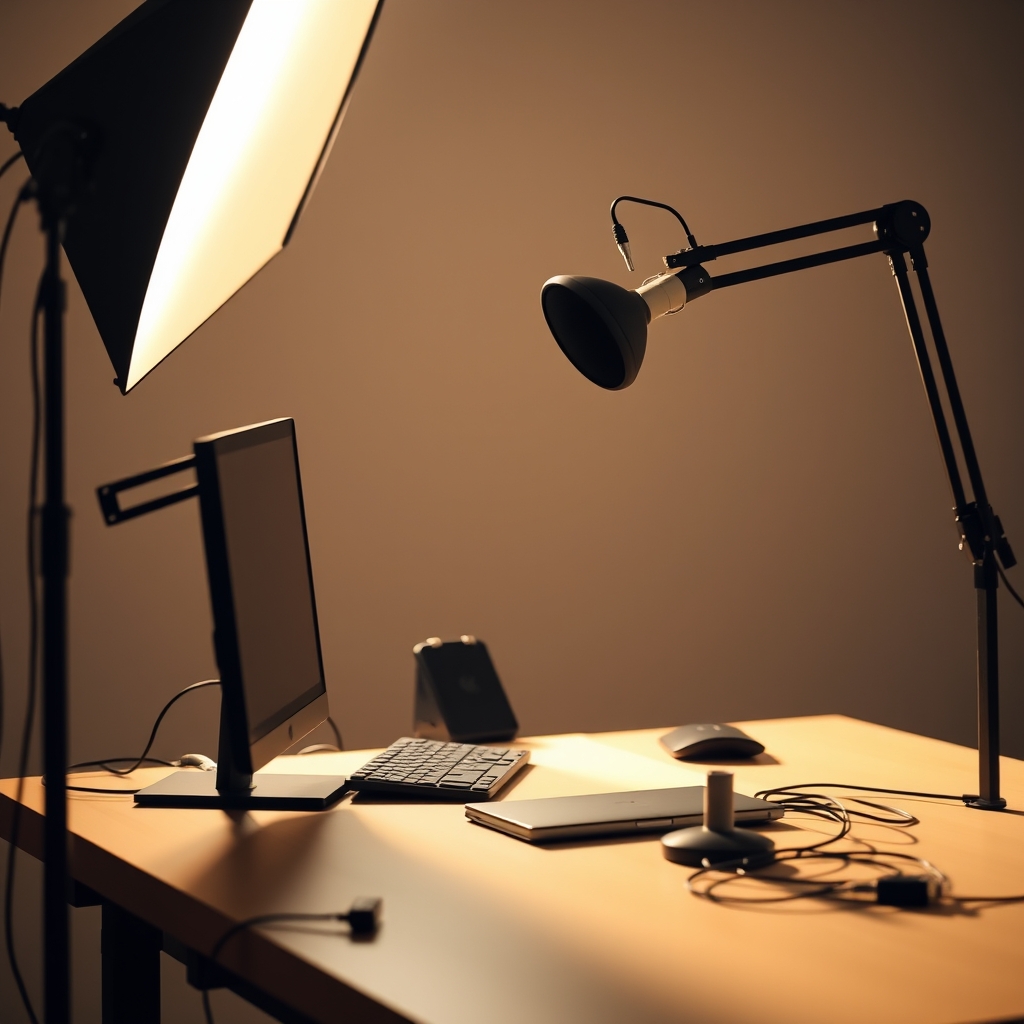
Another common misconception is that 'more light' equals 'better video.' The reality is, poorly placed or excessively harsh lighting creates unflattering shadows, washes out skin tones, and introduces distracting reflections. Many creators focus solely on lumen output or wattage, ignoring the critical aspects of diffusion, angle, and color temperature. A single, powerful LED panel without proper diffusion can be detrimental. In our labs, we consistently demonstrate that a smaller, well-diffused light source positioned at a 45-degree angle to the subject, coupled with a fill light or reflector, produces a more professional and aesthetically pleasing result than two undiffused, high-wattage lights directly aimed at the face. Aim for a Color Rendering Index (CRI) of 95+ for accurate skin tones. For a comprehensive understanding of effective illumination, explore Desk Lighting Benefits Masterclass.
The Camera Trap: Resolution vs. Real-World Impact
The relentless pursuit of 4K, 6K, or even 8K cameras is a prime example of an unnecessary youtube gear mistake for many creators. While impressive on a spec sheet, the vast majority of YouTube consumption still occurs on 1080p displays, often on mobile devices. The marginal benefit of higher resolution is frequently offset by increased file sizes, longer render times, and a heavier load on editing hardware. Here is what most people miss: lens quality, sensor size, and intelligent framing contribute far more to perceived 'cinematic' quality than pixel count. A high-quality prime lens on an APS-C sensor often yields a more pleasing, professional look than a mediocre zoom lens on a full-frame 8K camera. The depth of field, sharpness, and low-light performance derived from larger sensors and superior glass fundamentally alter the image. Understand the implications of sensor choice with What Happens When You Replace Full Frame for Crop Sensor Benefits.
Practical Tips for an Optimized Setup
- Prioritize Acoustics First: Before upgrading any microphone, spend time and minimal budget on room treatment. Even moving closer to soft furnishings, using blankets, or placing sound-absorbing materials strategically can make a significant difference. Use a simple room calibration app on your phone to measure reverb.
- Master Lighting Placement & Diffusion: Don't just buy a light; understand how to use it. Experiment with angles, distances, and diffusion materials (softboxes, umbrellas, even a white bedsheet). Start with a key light, then add a fill, and consider a subtle backlight for separation.
- Invest in Lenses, Not Just Bodies: A good lens will outlast camera bodies and provide superior optical quality. If budget is a constraint, a cheaper camera body with a stellar prime lens often produces better results than an expensive body with a kit lens.
- Test Your Setup End-to-End: Record short test clips. Play them back on different devices (phone, laptop, TV). Pay attention to audio clarity, visual appeal, and overall impression. This iterative testing uncovers issues before you commit to a long recording session.
- Focus on Intent: What story are you telling? Who is your audience? How will they consume your content? Let these questions dictate your gear choices, not arbitrary benchmarks. We've seen setups engineered with this mindset thrive, as discussed in Mastering Your YouTube Studio Setup: The Science of Engineering Your Space.
Mistakes to Avoid
- Ignoring the Signal Chain: One of my own significant early youtube gear mistakes was investing in a high-end XLR microphone, only to pair it with a cheap, noisy audio interface and record in an untreated, echo-prone office. The result? A sound worse than my basic USB mic. I learned that every component in the audio signal chain—from room acoustics to cable quality to pre-amp gain staging—impacts the final output. A weak link compromises the entire system, regardless of individual component cost.
- Over-relying on Post-Production: While editing software is powerful, it's a corrective tool, not a magic wand. Attempting to fix fundamental audio echo or severe lighting issues in post-production is time-consuming, rarely achieves professional results, and often introduces new artifacts. Get it right at the source.
- Chasing Trends Blindly: Don't buy a gimbal because a popular vlogger uses one if your content is primarily static studio commentary. Avoid complex multi-camera setups if a single, well-placed camera suffices. Your gear should serve your content, not the other way around.
- Neglecting Ergonomics and Workflow: An ergonomic setup isn't just about comfort; it directly impacts efficiency and long-term output. Tangled cables, poorly placed monitors, or uncomfortable seating are silent productivity killers. Consider how The 'Invisible Mess': Why Your Obsessive Cable Management Is Secretly Sabotaging Your Tech Setup's Lifespan also applies to workflow.
- Assuming Price Equates to Quality: This is the most common and expensive trap. High price often indicates features or build quality unnecessary for your specific application. A $300 lens might be a better choice for your use case than a $2000 lens. Always evaluate based on your needs, not a perceived status symbol. For creators needing solid, versatile lighting without breaking the bank, a well-regarded option like the UBeesize 12'' LED Ring Light offers excellent value by focusing on essential features for direct application.
Final Verdict
Overcoming common youtube gear mistakes isn't about acquiring the most expensive or feature-rich equipment. It's about a foundational understanding of physics—light, sound, and space—and applying that knowledge to your specific creative intent. Prioritize your environment (acoustics, background), master the basics of lighting and composition, and then strategically invest in gear that genuinely elevates your output. Your audience will notice the quality, not the brand labels. Build intentionally, test rigorously, and iterate relentlessly. That's the GlowRig way to a truly professional YouTube presence.
Frequently Asked Questions
What are the most common youtube gear mistakes?
The most common youtube gear mistakes include neglecting room acoustics for audio quality, prioritizing light quantity over quality and diffusion, chasing higher camera resolution unnecessarily, and assuming expensive gear automatically guarantees better results. Many creators also fail to test their full setup end-to-end before recording.
How important is room acoustics for YouTube video quality?
Room acoustics are critically important for YouTube video quality, especially for audio. An untreated room can introduce echo, reverb, and muddiness that even high-end microphones cannot overcome. Proper acoustic treatment, or even strategic placement of soft furnishings, can significantly reduce reverb times and improve audio clarity, making a $50 mic sound better than a $1,000 mic in a poor acoustic environment.
Should I buy 4K camera gear for YouTube?
For many YouTube creators, buying 4K camera gear is an unnecessary expense. The majority of YouTube content is consumed in 1080p, often on mobile devices, where the benefits of 4K are marginal. Prioritizing lens quality, sensor size, and strong composition will often yield a more impactful and professional-looking video than simply increasing pixel count, while also reducing file sizes and editing demands.
How can I improve my YouTube audio without buying a new microphone?
To improve YouTube audio without a new microphone, focus on your recording environment first. Reduce echo and reverb by adding soft furnishings, acoustic panels, or even blankets. Position your existing microphone optimally, typically close to your mouth. Ensure proper gain staging to avoid clipping or excessive background noise, and speak clearly. These foundational improvements often yield better results than a mic upgrade alone.
Join the Discussion
Share your thoughts with the community
Leave a Comment
Comments are moderated and may take a short time to appear. Links are not permitted.