Toxic Desk Mats Masterclass: What You Need
I once thought a desk mat was just a surface. Then came the 'new car smell' that refused to dissipate, revealing the hidden truth about toxic desk mats. It was a constant, subtle assault on my workspace's aesthetic.

I once thought a desk mat was just a surface. A protective layer, a splash of color. Then came the "new car smell" that refused to dissipate, clinging to my workspace for weeks. It wasn't just an unpleasant odor; it was a constant, subtle assault on the carefully curated calm of my setup, revealing the hidden truth about toxic desk mats and their silent sabotage of aesthetic and atmosphere.
The allure of a cheap, stylish desk mat is undeniable. A quick fix to add texture or protect a pristine desk. But here’s the reality: many mass-produced mats, particularly those made from low-grade PVC, synthetic rubbers, or unknown composites, harbor more than just dust. They can off-gas Volatile Organic Compounds (VOCs) for extended periods. This isn't just a concern for indoor air quality; it's a direct threat to your workspace's sensory integrity. That persistent chemical scent isn't just annoying; it's actively degrading the very atmosphere you're trying to cultivate. Beyond the fumes, these materials often stiffen, warp, or discolor prematurely, turning a vibrant focal point into a visual anachronism, completely ruining the intended vibe.
The solution isn't just about avoiding a few notorious chemicals; it's about a holistic approach to material selection that prioritizes enduring aesthetics, tactile pleasure, and a genuinely healthy atmosphere. We advocate for a deliberate choice in materials, understanding their origin, processing, and long-term behavior. Think beyond "non-toxic" labels to materials that enhance your daily interaction and maintain their visual and tactile integrity over years, not months. This means understanding the material science, not just the marketing.
Why toxic desk mats matters
The Unseen Cost of Toxic Desk Mats
It’s easy to dismiss a faint smell. But the unseen cost of toxic desk mats extends beyond immediate discomfort. Many synthetic mats are manufactured using plasticizers like phthalates to achieve flexibility, or contain formaldehyde in their glues and coatings. These compounds are known to off-gas, and while individual exposure levels might seem low, their cumulative effect in an enclosed office space contributes to poor indoor air quality.

The immediate impact is often on your focus and mood. A persistent background odor, even subconscious, creates a subtle sense of unease. Over time, these materials also show their true colors – literally. Cheap dyes fade unevenly, plastics become brittle or sticky, and edges curl. The vibrant texture you initially envisioned becomes a dull, static-ridden shadow of its former self. This rapid degradation forces premature replacement, an unsustainable cycle that undermines both your aesthetic vision and your wallet. The true luxury of a desk mat isn't its initial price, but its ability to gracefully age, maintaining its sensory appeal and structural integrity.
Material Science for Aesthetic Longevity
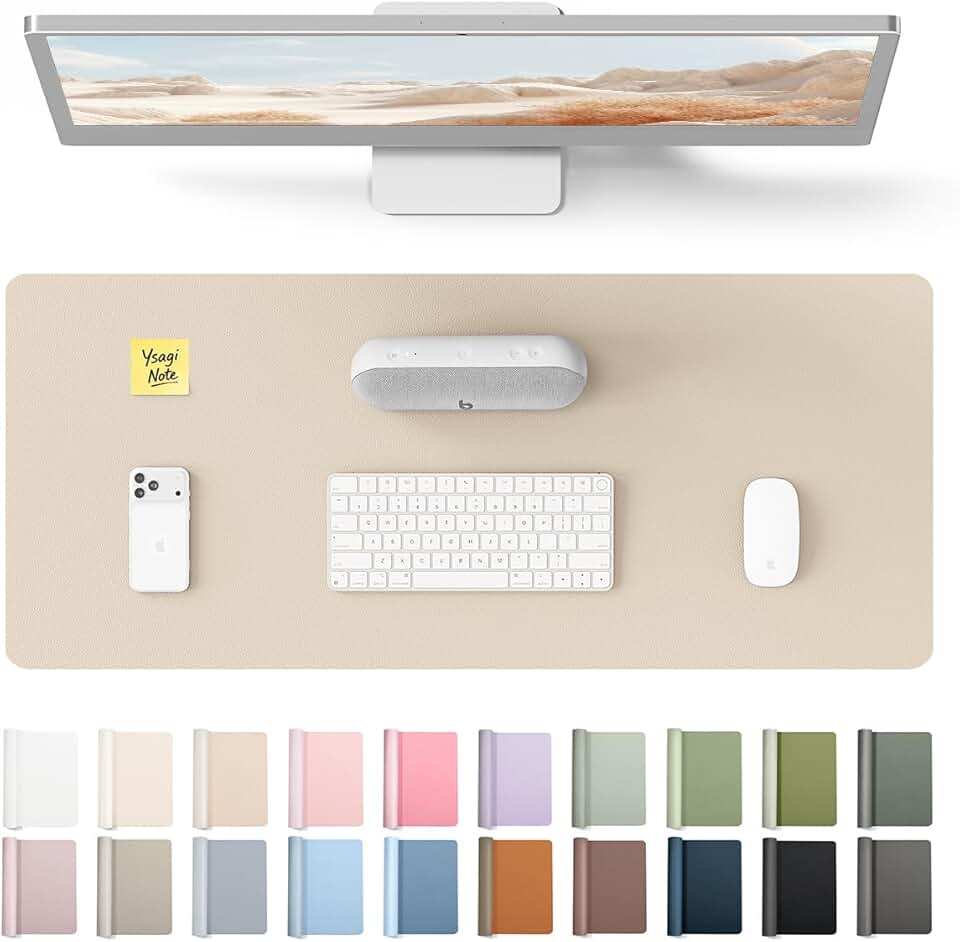
🔥 YSAGi Leather Desk Pad Protector, Office Desk Mat, Large Mouse Pad, Non-Slip PU Leather Desk Blotter, Waterproof Laptop
Aesthetic protection and smooth navigation
- Durable PU Leather
- Waterproof & Easy Clean
- Non-Slip Base
Choosing a desk mat should be an exercise in sensory engineering. The key lies in understanding how different materials interact with light, touch, and even the air around them.
Full-Grain Leather: When sourced responsibly and treated with vegetable dyes, full-grain leather offers unparalleled longevity and a patina that deepens with age. It's naturally low-VOC and develops a rich, sophisticated texture. Its smooth surface provides consistent mouse glide, and spills wipe away easily. In our testing, quality leather mats maintain their structural integrity for years, resisting peeling or cracking, unlike many synthetic alternatives. However, consider the tanning process – chrome-tanned leather can sometimes present its own issues, so research specific suppliers.
Natural Wool Felt: For a softer, warmer aesthetic, high-density wool felt (ideally 100% merino wool) is an excellent choice. It's naturally antimicrobial, highly absorbent (great for spills, but needs prompt cleaning), and provides a unique tactile experience. It's a fantastic insulator, muffling keyboard sounds and adding a cozy, inviting layer. We've found felt mats, particularly those with a density of 3mm or more, offer excellent vibration dampening, contributing to a more focused workspace.
Cork: Harvested sustainably from cork oak trees, cork is a lightweight, naturally non-slip, and renewable material. It offers a firm yet yielding surface and has a distinct organic texture. It's naturally water-resistant and antimicrobial. However, pure cork can be prone to scuffing and tearing with aggressive use, so look for laminated or thicker versions for enhanced durability.
Tempered Glass or Aluminum: While not "mats" in the traditional sense, these offer ultra-premium, inert, and completely non-toxic surfaces. They are visually minimalist and offer superb mouse tracking. The trade-off is often a colder touch and a less forgiving surface for typing, which might impact the overall workspace design psychology.

Ventilation & Off-Gassing: The Unsung Hero of Desk Mats
Here is what most people miss: even seemingly "safe" materials can benefit from proper ventilation, especially when new. Many products, even those with certifications, will release some level of VOCs initially, a process known as off-gassing. Think of it like a freshly painted room—it needs to breathe. When you unroll a new mat, particularly larger ones, unroll it in a well-ventilated area for 24-48 hours before placing it on your desk. This simple step drastically reduces any initial sensory impact. The reality is, even a low-VOC material will off-gas more significantly if stored tightly rolled in plastic packaging for months. Giving it space to breathe allows any trapped compounds to dissipate before they become a constant feature of your workspace. This also applies to new furniture or even new cable management solutions.
Practical Tips
- Check Certifications (with caution): Look for certifications like OEKO-TEX Standard 100 for textiles, or REACH compliance for general chemical safety. While not foolproof, these indicate a manufacturer's commitment to reduced harmful substances.
- The Smell Test: Before purchasing, if possible, or immediately upon unboxing, conduct a "smell test." A strong, chemical, or plastic-y odor is a red flag. A faint, natural smell (like leather or wool) is generally acceptable, but anything acrid should lead to a return.
- Prioritize Natural Fibers: For an inherently low-VOC option, gravitate towards materials like cork, bamboo, natural linoleum, or high-density wool felt. These materials often have a unique texture that can elevate your setup's aesthetic, much like choosing raw pottery over processed ceramics for desk plants, as explored in "The 'Ugly' Plant Pot Secret."
- Consider Thickness and Backing: Thicker mats generally signal better quality and durability. Also, check the backing material. Natural rubber is often used for non-slip properties and is generally superior to synthetic plastic alternatives, but it can still have an initial odor.
- Placement Matters: Ensure your desk space itself is well-ventilated. Placing a mat in a perpetually stagnant air zone can exacerbate any off-gassing issues, irrespective of the mat's inherent "toxicity."
Mistakes to Avoid
My most significant mistake in this domain was falling for the "eco-friendly" label without scrutinizing the underlying material. I once bought a mat marketed as "vegan leather" and "sustainable," only to find it was a low-grade PVC composite. Within weeks, it developed a sticky surface, the edges peeled, and the persistent chemical odor was a daily reminder of its true nature. It completely disrupted my focused work sessions and actively contradicted the calm, natural aesthetic I was building. This wasn't just an aesthetic misstep; it was a distraction. This experience taught me that terms like "vegan" or "eco" without specific material disclosure (e.g., "recycled PET felt" vs. "vegan leather made from PVC") can be misleading. Always ask for specifics on composition, and don't assume a low price means a good deal when it comes to long-term sensory input.

Final Verdict
Your desk mat is more than just a surface; it's an anchor for your daily focus and a significant contributor to your workspace's overall atmosphere. Overlooking the potential for toxic desk mats due to material choices or manufacturing processes means sacrificing both a healthy environment and a lasting aesthetic. By deliberately choosing high-quality, naturally low-VOC materials and understanding basic ventilation principles, you elevate your setup from merely functional to truly inspiring. Invest in materials that age gracefully, smell clean, and feel right, ensuring your desk supports, rather than detracts from, your deep work.
Frequently Asked Questions
What are the most common materials that contribute to toxic desk mats?
Common culprits include low-grade PVC (polyvinyl chloride), certain synthetic rubbers, and some cheap foam composites. These materials often rely on plasticizers, dyes, and adhesives that can off-gas VOCs like phthalates and formaldehyde.
How can I tell if my existing desk mat is off-gassing or "toxic"?
The most immediate sign is a persistent, strong chemical or plastic-like odor that doesn't dissipate after a few days of unboxing. Other indicators include the material feeling unusually sticky, developing an oily residue, or showing signs of rapid degradation like cracking or peeling, particularly if it's not exposed to harsh conditions.
Are all "natural rubber" desk mats safe from off-gassing?
While natural rubber (latex) is generally considered a better choice than synthetic rubbers, it can still have a distinct, somewhat sweet, rubbery odor, especially when new. For individuals with latex sensitivities, it can also be an allergen. It's usually a temporary off-gassing, but proper ventilation upon unboxing is still recommended.
Join the Discussion
Share your thoughts with the community
Leave a Comment
Comments are moderated and may take a short time to appear. Links are not permitted.